Quick summary
Delta One and United Polaris are the two strongest international business class products flying out of the US right now — and in 2026, the gap between them is closer than ever. Delta wins on hardware consistency and cuisine; United wins on lounges and route reach. Which one's right for you depends heavily on where you're flying and how you're booking.
I've sat in both more times than I can count. The Delta One Suite on a transatlantic A350, the United Polaris cabin on a 777-300ER to Tokyo. I've eaten Danny Meyer's short rib at 38,000 feet and I've sipped a genuinely good Barolo in a Polaris seat somewhere over the Pacific. So when people ask me to settle the Delta One vs United Polaris 2026 debate, I have opinions. Strong ones.
Here's the honest answer: neither product is perfect, and anyone telling you one is a clear, obvious winner hasn't flown both recently.
The hard product: seats, doors, and dimensions
Let's start with the physical seat because it's what most people obsess over — and fair enough, you're spending 8+ hours in it.
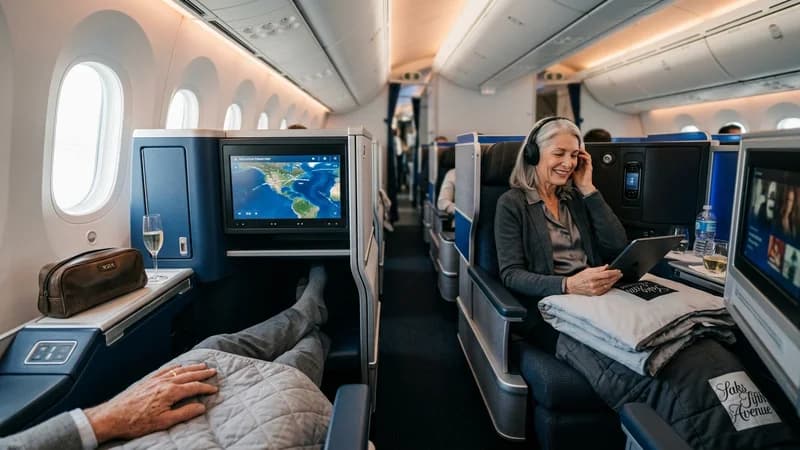
Which seat actually sleeps better?
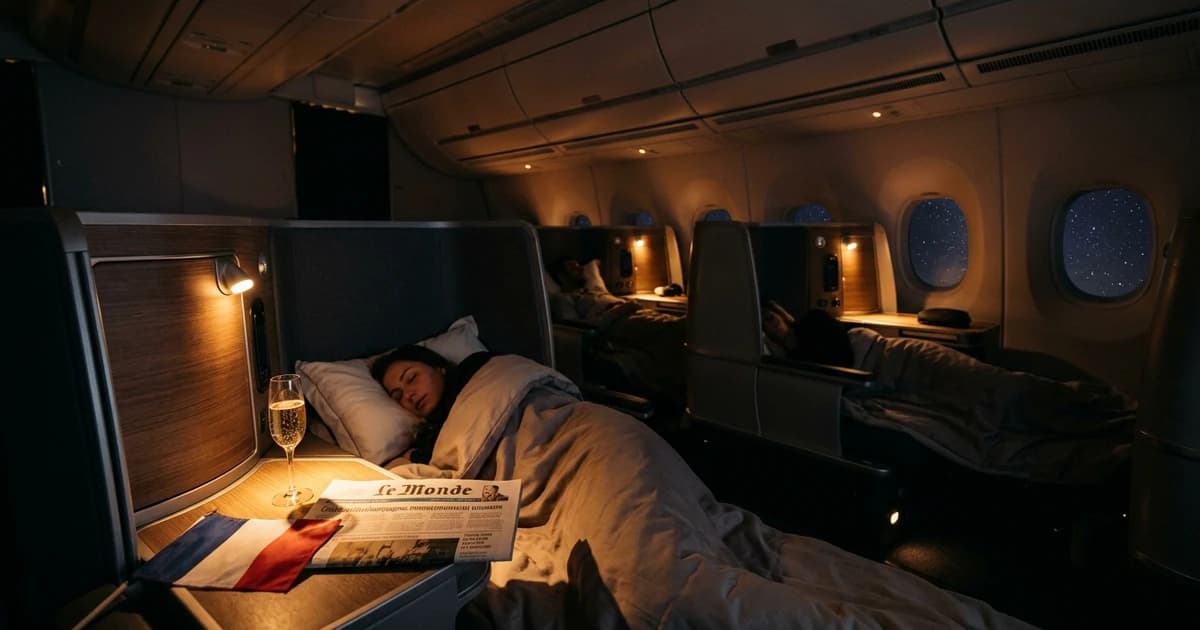
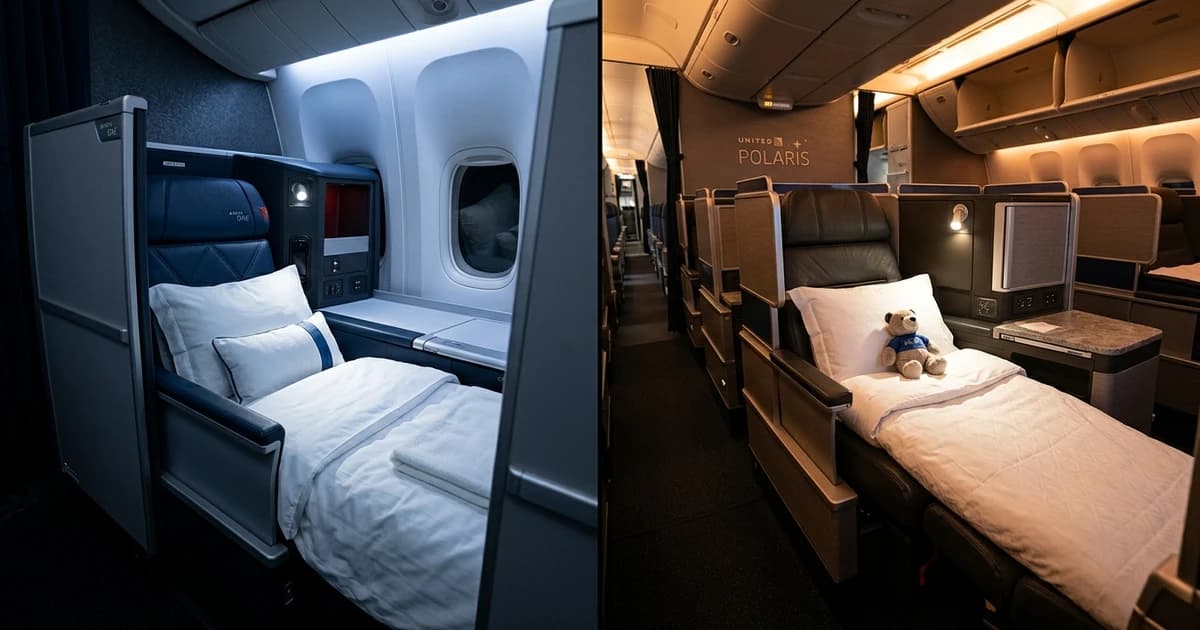
The Delta One Suite wins this. The door isn't just a gimmick — it blocks cabin noise, kills light bleed from the aisle, and gives you a psychological sense of enclosure that genuinely helps sleep. I've woken up on Delta's A350 feeling more rested than on almost any other airline.
United's Polaris bed is still good. Saks Fifth Avenue bedding, a proper pillow, a duvet that's actually warm. But the middle seats on the 777 (the 2-across pairs) catch aisle light and noise in a way the suite simply doesn't. Book a window seat in Polaris and the gap narrows considerably.
Seat selection matters more on Polaris
On United's 777-300ER, window seats (A and K) offer significantly more cocoon-like privacy than the middle pairs. If you're booking Polaris specifically for sleep, window seats are non-negotiable.
Soft product: food, wine, and the details that actually matter
This is where the two products diverge most sharply — and where your personal priorities will decide the winner.

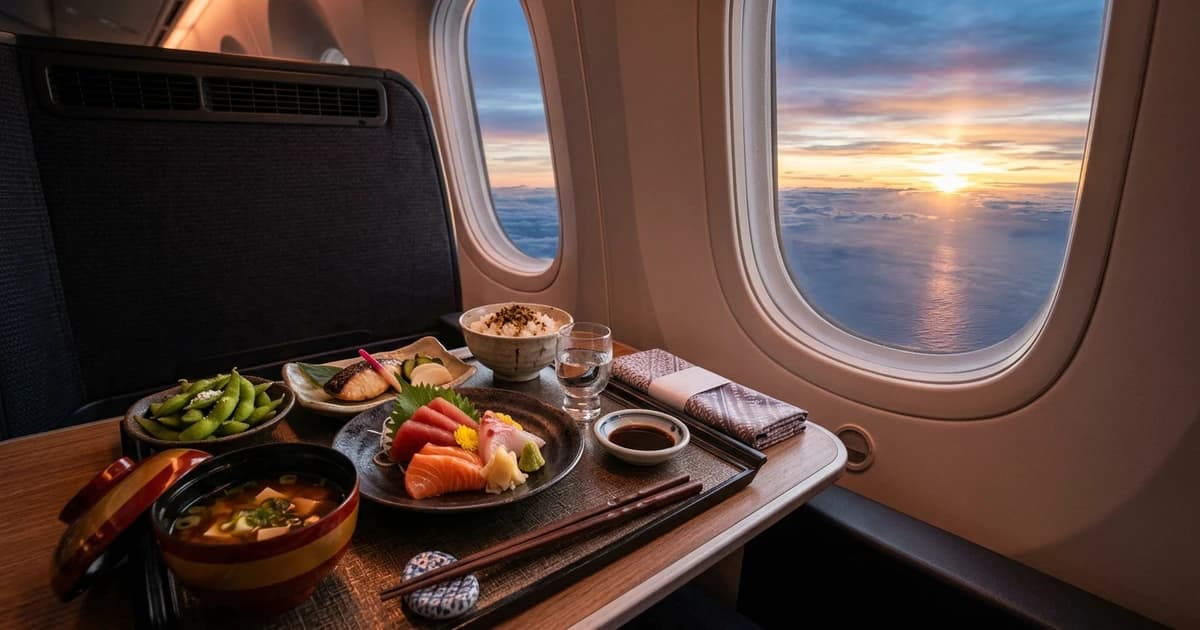
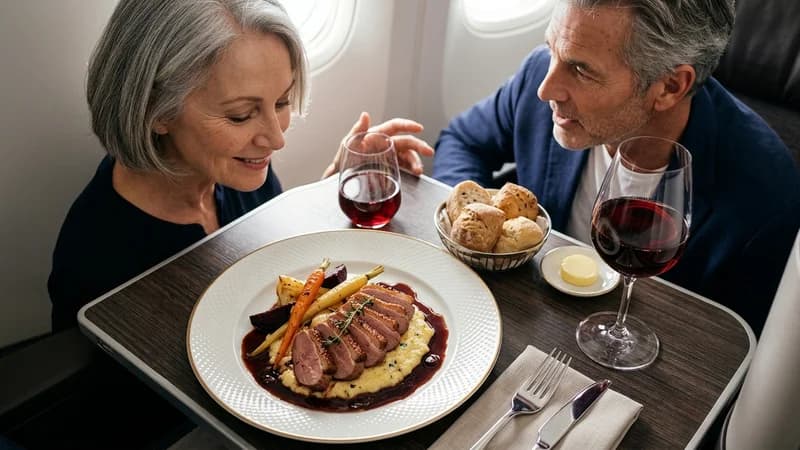
Delta's partnership with Danny Meyer's Union Square Hospitality Group has been running long enough now that it's actually reliable. The menus rotate seasonally, the plating is thoughtful, and the execution in the air tends to match what you'd expect from a serious restaurant group. I had a mushroom risotto on a JFK-LHR flight last year that I'd genuinely order on the ground. The breakfast options are particularly strong.
United's food story is more complicated. The "regionally inspired" multi-course menu concept is genuinely interesting on paper — the idea that a flight to Tokyo gets different menu DNA than a flight to Frankfurt. In practice, execution varies. I've had excellent meals on United's Pacific routes and forgettable ones on the same sector a month later. The concept is good. The consistency isn't quite there yet.
Where United absolutely wins is the wine program. The Polaris wine list is curated with actual care — small-production bottles, proper vintages, and selections that change meaningfully by route. Delta's wine program is fine. United's is genuinely worth paying attention to.
Pro Tip
Ask your United flight attendant about the wine list before ordering. On longer flights, they'll often let you try a small pour before committing, especially in less full cabins.
The amenity kits are roughly equivalent — both solid, neither exceptional. Delta uses Grown Alchemist products; United uses Soho House's Cowshed line. I'd call it a draw.
Lounge experience: where United pulls ahead
This is the most clear-cut category in the entire Delta One vs United Polaris 2026 comparison, and United wins it by a significant margin.
United Polaris Lounges — dedicated, invitation-only spaces at EWR, IAD, ORD, LAX, and SFO — are genuinely excellent. The à la carte dining is real restaurant food, not buffet trays. There are proper shower suites. The design is calm and intentional. I've had a full sit-down meal at the Polaris Lounge at ORD that was better than some of what I've eaten in the air.
Delta Sky Clubs are... fine. They're crowded. They've gotten better with food in recent years, and the Reserve Card-adjacent access tiers have actually helped thin the crowds somewhat. But they're not in the same category as a dedicated Polaris Lounge. Delta doesn't have a true premium lounge product to match what United offers international business class passengers.
Sky Club access is getting tighter
Delta has been restricting Sky Club access for non-Medallion members, and overcrowding at major hubs like ATL and JFK remains a real issue. If lounge quality matters to you, factor this in.
If you're flying out of a United hub — Newark especially — and you have a long layover before an international departure, the Polaris Lounge experience alone can shift the calculus.
Fleet consistency: Delta's quiet advantage
Here's something that doesn't get talked about enough: it matters less which product is theoretically better if you can't count on actually getting it.

Delta has done a better job of putting the Suite product on its long-haul routes. If you're booking a transatlantic Delta One flight on an A350 or A330neo, you're almost certainly getting the suite. The older 767s are still out there on some routes, and that's a different (lesser) product — but Delta has been aggressive about transitioning key routes.
United's situation is messier. The Polaris product on a 787-10 is excellent. On a 777-300ER, still excellent. But United still operates some international routes on older 767s and 777-200s with a legacy configuration that doesn't offer the same experience. Checking the specific aircraft before booking isn't optional — it's essential.
How do I know what aircraft I'm actually getting?
Use SeatGuru or Google Flights' aircraft filter. Search by flight number on United's site and look for the equipment code. On United, a 787-10 (B78X) or 777-300ER (77W) means current Polaris. A 767-300 or 777-200 means older configurations — skip it or choose a different flight.
Delta's A350 (A35K) and A330neo (A339) routes are your targets. The 767-400 (76D) still flies some transatlantic routes with an older product.Pro Tip
Always verify the specific aircraft type before booking any international business class fare. Airlines swap equipment more often than they admit, and the product difference can be substantial.
WiFi: United is catching up fast
A year ago, this wasn't a contest — Delta's Viasat connectivity was faster and more reliable on most routes. In 2026, United's Starlink rollout has changed the picture considerably.
United started installing Starlink on its domestic fleet and is now expanding to international. Where it's available, Starlink is genuinely fast — video call capable, streaming capable, the kind of connectivity that actually lets you work. Delta's Viasat is still solid over the North Atlantic but can degrade over the Pacific.
This one's moving fast enough that I'd call it a draw right now, with United likely pulling ahead over the next 12-18 months if the Starlink rollout stays on schedule.
Route network: United wins on reach
If you're flying to Asia, United is the stronger choice — and it's not particularly close. United's Pacific network out of SFO, LAX, and IAD covers Tokyo Narita and Haneda, Osaka, Seoul, Shanghai, Hong Kong, Singapore, and more. The frequency and hub connectivity are hard to match.
Delta's transatlantic network is excellent — strong coverage of Europe with meaningful service out of JFK, ATL, and BOS. But for Asia, Delta's own flights are thinner on the ground, and you end up routing through partners more often.
For European routes, Delta's product advantage (the suite, the cuisine consistency) makes it the better pick on equivalent routes. For Asian routes, United's network depth plus the Polaris product makes it the natural choice.
Pricing and how to actually book smart
Published fares for both carriers sit in similar territory — you're looking at $2,000 to $2,400 round-trip to Europe in business class on a decent sale, and $3,000 to $4,500 to Asia. Neither airline is chronically cheaper than the other at rack rates.

Where things get interesting is consolidator pricing. BestBusinessClass works with a network of consolidator fares that can bring both Delta One and United Polaris tickets down meaningfully — sometimes 20 to 40 percent below what you'd find on the airline's own site or Google Flights. The fares are fully ticketed, real itineraries, not opaque charter situations.
I'd encourage anyone booking a long-haul business class trip to at least check what BestBusinessClass has available before paying published rates. The savings on a round-trip to Tokyo can easily cover a hotel night or two.
Browse current deals on both Delta One and United Polaris routes to see what consolidator pricing looks like right now.Timing your booking
Both Delta and United release business class sale fares on Tuesdays and Wednesdays. Consolidator rates through BestBusinessClass are available year-round and often beat flash sales without the narrow booking windows.
What the frequent flyer angle looks like
If you're accumulating miles on one program, that matters. SkyMiles and MileagePlus both have their advocates and their critics. SkyMiles has famously moved away from a distance-based redemption model, which has frustrated some travelers. MileagePlus has better sweet spots for partner redemptions, particularly on Star Alliance carriers.

But if you're buying a discounted consolidator fare through BestBusinessClass, you're typically still earning elite qualifying miles and redeemable miles — which is another reason the consolidator route makes more sense than it might initially seem.
So which one wins in 2026?
For the Delta One vs United Polaris 2026 comparison, here's where I actually land:
Choose Delta One if:- You're flying transatlantic and the suite door matters to you
- Cuisine consistency is a priority
- You want the most reliable premium product without checking equipment type obsessively
- You're based in Atlanta, New York, or Boston
- You're flying to Asia — the network genuinely wins here
- Lounge access at a United hub is part of your trip
- You care more about wine than food
- You want a slightly wider seat and don't need the door
Neither product will disappoint you on a good day. The question is which tradeoffs you're willing to accept. And on a bad day — delayed departure, equipment swap, mediocre crew — both airlines are mortal.
The most consistent advice I can give: book the right aircraft, check the specific equipment, and use a service like BestBusinessClass to make sure you're not overpaying for whichever product you choose. A discounted Polaris seat on a 787-10 out of SFO to Tokyo is one of the best value propositions in international business class. A Delta One Suite on an A350 to London is genuinely hard to beat for the transatlantic crossing.
Both are good. Pick the right one for your trip.
Get discounted Delta One and United Polaris fares through our consolidator network — often 20–40% below published rates.
Call NowThis article was created with AI assistance and reviewed by our editorial team.
Business class deals, delivered
Join savvy travelers who receive exclusive deals, route tips, and insider knowledge. Free, weekly, no spam.
Unsubscribe anytime. We respect your inbox.
By submitting, you agree to our Privacy Policy and Terms of Service.
Ready to book your business class flight?
Our specialists access unpublished fares and save you up to 40% on premium cabins.
Related Routes