Quick summary
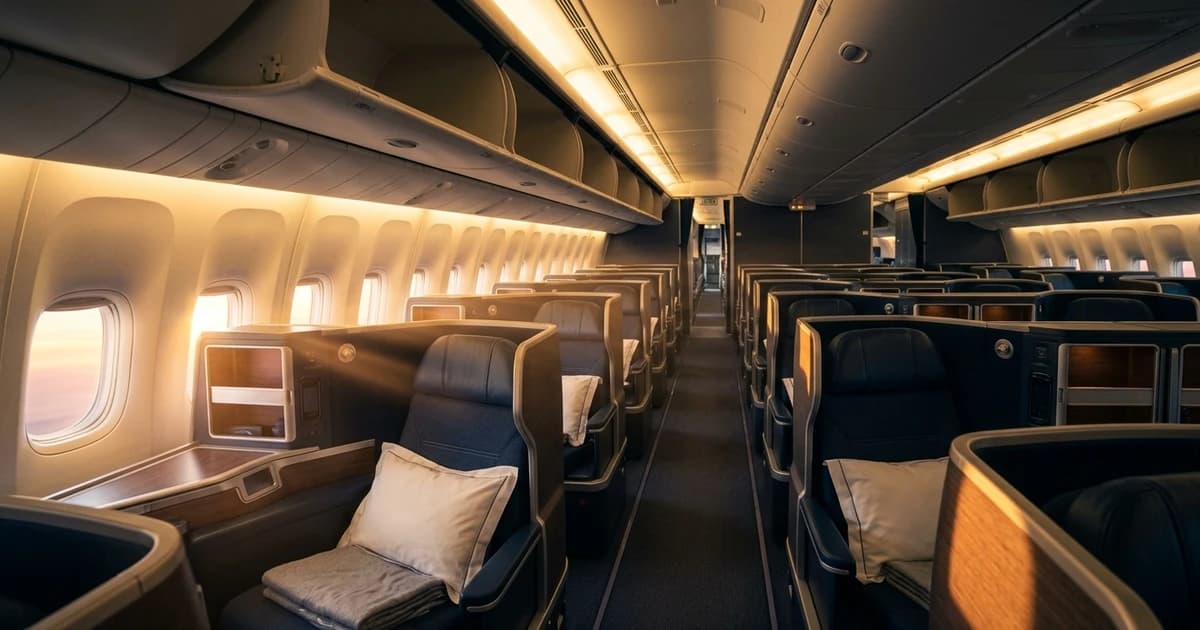
Business class doesn't have to cost $8,000 round-trip. In 2026, there are five distinct methods to fly up front for a fraction of retail — from consolidator fares that routinely beat published prices by 40–65%, to points sweet spots that savvy travelers have been quietly exploiting for years. This guide covers all of them, with honest assessments of when each one actually makes sense.
I've sat in business class seats I paid $1,800 for and seats that cost the person next to me $9,400. Same cabin. Same champagne. Same flat bed. The difference wasn't luck — it was knowing which lever to pull and when.
The retail price of business class is largely fictional. Airlines set it high because corporations pay it without blinking. But for everyone else, that sticker price is a ceiling, not a floor. The question is which method gets you furthest below it on any given route.
Here's how to book cheap business class in 2026 — broken down by method, with real numbers attached.
Tier 1: Consolidator fares (the method most people have never heard of)
This is where I'd start every search. Always.

Consolidators are wholesale ticket brokers that purchase blocks of seats from airlines under private contract agreements. The airlines offload inventory they're not confident they can sell at retail. The consolidator resells those seats at a markup — but still well below what you'd pay on the airline's own site or through a standard OTA like Expedia.
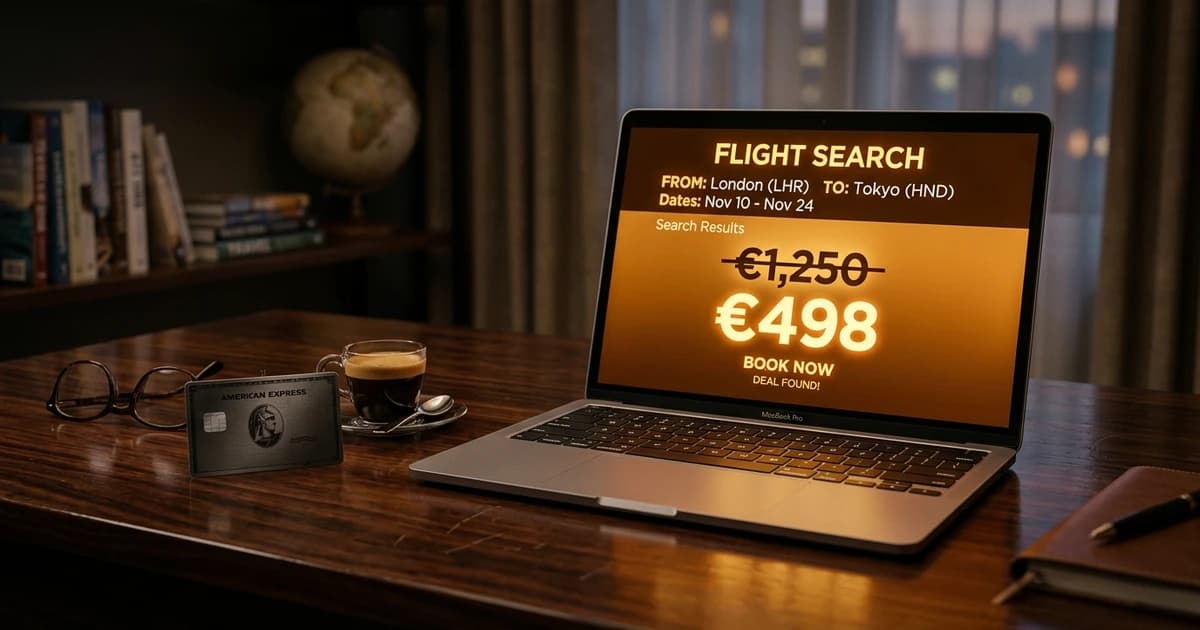
The savings aren't small. On transatlantic routes, consolidator fares typically run 40–65% below published business class prices. On transpacific routes, the gap can be even wider.
The catch is that these fares aren't publicly listed anywhere. You won't find them on Google Flights. They exist inside proprietary booking systems that consolidators access through direct airline relationships — net fares that never hit the public GDS.
That's exactly what BestBusinessClass.com does. The team has spent years building direct relationships with airline revenue management desks, which means access to contract fares that most travel agencies simply don't have. When you call (888) 851-6897, you're not getting a standard travel agent looking up the same fares you could find yourself — you're tapping into a wholesale network.
One thing worth knowing: consolidator tickets sometimes come with restrictions. They may be non-refundable, or they may have limited change flexibility. BestBusinessClass's price guarantee covers you if a published fare drops below what you paid within 24 hours of booking — the difference gets refunded. That's a meaningful backstop.
Pro Tip
Always ask specifically about change and cancellation terms on any consolidator ticket before you book. A cheap fare with zero flexibility might not be worth it if your travel plans are uncertain.
Tier 2: Points and miles (powerful, but overhyped for most people)
Points are great. I use them. But the travel media treats them like a universal solution, and they're not. They work brilliantly when you hit a sweet spot — and they're genuinely terrible when you don't.

What are the best transferable points currencies in 2026?
The three worth holding are American Express Membership Rewards, Chase Ultimate Rewards, and Citi ThankYou Points. All three transfer to a long list of airline partners, which gives you flexibility. The key is that you're almost never redeeming these points for face value — you're hunting for outsized redemptions where the airline's own award chart (or a partner's) dramatically underprices a premium cabin seat.
The sweet spot that's survived longer than most: ANA business class booked through Virgin Atlantic Flying Club at 55,000 miles each way for a transatlantic flight. ANA's own award chart would charge you more. Virgin Atlantic's partner pricing for ANA is one of the best-kept values in the program. Amex MR transfers to Virgin Atlantic at a 1:1 ratio.
Another one: Air Canada Aeroplan for Star Alliance business class redemptions, where the program prices by distance rather than by airline — which means you can sometimes book Lufthansa business class at rates that would make you feel guilty.
Before you transfer points
Points transfers to airlines are almost always irreversible. Never transfer until you've confirmed award space is actually available. Use the airline's own search tool or call the program's phone line.
When do points NOT make sense?
When cash fares are already cheap. If BestBusinessClass can find you a consolidator deal at $1,800 round-trip to Europe, burning 120,000+ Amex points for the same seat is a poor trade — especially given that points have real opportunity cost.
Points shine on routes where cash prices stay stubbornly high and award space is available. Long-haul business class to Japan, Australia, and some African routes often fit that profile.
The dirty secret of award travel is that it takes time. Searching for availability, monitoring for space, learning program rules — it's a part-time hobby. If you'd rather spend that time doing literally anything else, a consolidator fare from BestBusinessClass is a faster path to the same seat.
Tier 3: Positioning fares — the geography arbitrage play
This one requires flexibility, but it's genuinely underused.

The idea is simple: sometimes flying to a departure city unlocks a dramatically cheaper business class fare than flying directly from your home airport. You're essentially building your own connection through a city with better pricing.
The classic example: Boston (BOS) to London (LHR) business class. If you fly BOS-DUB on Aer Lingus (often surprisingly cheap in business), then connect DUB-LHR on a separate ticket, you've accessed Heathrow as a departure point — where transatlantic business class fares can be significantly lower than what's priced out of Boston.
Book these as separate tickets
Positioning itineraries involve booking two separate tickets. Miss your first flight and the airline has zero obligation to rebook you on the second. Build in serious buffer time and consider travel insurance.
Other positioning plays worth knowing:
- Flying into Dublin or Shannon to access Aer Lingus transatlantic business class, which often prices below its US-originating equivalent
- Positioning to Frankfurt for Lufthansa first or business class at German-market fares, which can be cheaper than US-originating tickets on the same aircraft
- Toronto as a departure point for some transpacific routes, where Air Canada prices business class lower than equivalent US gateway cities
The math has to work. Add up your positioning flight cost, the time cost, and the logistical risk — then compare against what BestBusinessClass can find on a direct routing. Sometimes the positioning fare wins. Sometimes it doesn't. Run the numbers every time.
Tier 4: Mistake fares and sales
I'd classify this as opportunistic rather than strategic. You can't plan a vacation around a mistake fare. But if you're flexible enough to drop everything and book when one surfaces, the payoffs can be absurd.

Mistake fares happen when an airline fat-fingers a fare filing, when a currency conversion error creates a pricing anomaly, or when a sale is misconfigured. They typically last anywhere from two hours to two days before the airline catches it and either honors or cancels the bookings.
The tools to monitor:
- Google Flights price alerts — set them for specific routes and you'll get notified when fares drop significantly
- Secret Flying — catches mistake fares quickly and posts them with enough lead time to book
- Going (formerly Scott's Cheap Flights) — their premium tier specifically tracks business class errors and sales
Pro Tip
When a mistake fare surfaces, book first and ask questions later. Most airlines will honor confirmed bookings. If they cancel, you're out nothing. If they honor it, you've just scored a $900 round-trip business class ticket to Asia.
Flash sales are different from mistake fares — they're intentional, but the windows are short. Airlines like Lufthansa, British Airways, and Emirates run periodic business class sales that can take 30–40% off published fares. The catch is that these are typically for specific travel windows, often 2–4 months out.
The honest assessment: mistake fares and sales are supplements to a strategy, not a strategy themselves. If you're trying to book cheap business class in 2026 for a specific trip on a specific date, you need one of the other tiers.
Tier 5: Bid-to-upgrade programs
Several airlines now let economy or premium economy passengers bid on unsold business class seats in the days before departure. The mechanism is straightforward: you submit a bid above a minimum threshold, and if the airline decides your offer is worth more than leaving the seat empty, you get upgraded.
Airlines currently running these programs:
- SAS — their upgrade bid system is one of the more transparent ones; you get a clear minimum bid and a "likely to succeed" indicator
- Air New Zealand — runs a "Upgrade My Flight" program with similar mechanics
- Qantas — "Points + Pay" upgrades and cash upgrade offers sent via email pre-departure
- Virgin Atlantic — upgrade offers sent 7–14 days before departure
What's an optimal bid amount?
This is genuinely hard to answer because it varies by route, load factor, and how many other passengers are bidding. The general rule I've seen hold up: bid 20–35% of the one-way retail business class fare and you're in a reasonable range. Too low and the airline ignores you. Too high and you've partially negated the savings.
The success rate across these programs hovers around 15–25% based on what travelers report. That's not high. I wouldn't count on a bid upgrade for a trip that matters.
Bid upgrades work best when...
You're flying a route with historically low business class load factors, you're bidding in the sweet spot window (3–5 days before departure), and you have no strong preference for seat selection or specific meal pre-ordering — those perks often aren't available on bid upgrades.
Where bid upgrades genuinely shine is on routes you're already flying, where the upgrade is a nice bonus rather than a core plan. Book your economy ticket, put in a reasonable bid, and treat any upgrade as a pleasant surprise.
The decision matrix: which method fits your situation
Not every approach works for every traveler. Here's how to think about it:

- You have a specific destination and date range
- You want confirmed business class without the uncertainty of points availability
- You're booking 1–12 months out
- You want a straightforward process without learning program rules
- You have a meaningful stash of transferable points sitting idle
- You've identified specific award availability on a route
- The cash fare on that route is genuinely high and award redemption gives strong value per point
- You're geographically flexible about where you depart from
- You have time to build in buffer for connections
- The math actually works out cheaper than a direct consolidator fare
- You're flexible on destination and travel dates
- You're monitoring tools consistently and can book on short notice
- You're treating this as a supplement to your main booking strategy
- You're already booked in economy and have nothing to lose
- You're flying a low-load-factor route
- You bid within 3–5 days of departure
The fastest path to cheap business class in 2026
Call BestBusinessClass at (888) 851-6897 before you do anything else. Tell them your route, dates, and budget. In most cases, they'll find a consolidator fare that beats what you'd piece together on your own — and you'll have an actual human managing the booking if anything goes sideways.
How to actually book cheap business class in 2026 without wasting days of research
The meta-strategy here is to run methods in parallel rather than in sequence.
Start with a consolidator quote from BestBusinessClass as your baseline. Then check points availability for the same route. If the points redemption gets you above ~1.5 cents per point in value, consider it. If not, the consolidator fare wins by default.
Meanwhile, set a Google Flights alert for your route and glance at Secret Flying a couple of times a week. If a mistake fare or flash sale surfaces before your trip, great. If not, you're not counting on it.
The travelers who consistently fly business class without spending retail prices aren't doing one clever thing. They know which tool fits which situation, and they check more than one source before they book.
The best transatlantic business class products in 2026 is worth reading alongside this — knowing which product you're actually targeting helps you choose the right booking method. Some airlines are more consolidator-friendly. Others have better award availability. The route matters as much as the method.BestBusinessClass has a price guarantee that's worth understanding: if a published fare on your route drops below what you paid within 24 hours of booking, they'll refund the difference. That removes one of the main anxieties around booking early — the fear that you'll lock in a price and watch it fall.
JFK to LHR business class deals and LAX to HND business class deals are two of the most searched routes on the site if you want to see current pricing before you call.The bottom line is that business class in 2026 is genuinely more accessible than it's ever been — not because airlines suddenly got generous, but because the tools and networks available to individual travelers have caught up to what corporate travel desks have always had access to. You just have to know where to look.
Get a consolidator quote on your route — business class fares up to 65% below retail
Call (888) 851-6897This article was created with AI assistance and reviewed by our editorial team.
Business class deals, delivered
Join savvy travelers who receive exclusive deals, route tips, and insider knowledge. Free, weekly, no spam.
Unsubscribe anytime. We respect your inbox.
By submitting, you agree to our Privacy Policy and Terms of Service.
Ready to book your business class flight?
Our specialists access unpublished fares and save you up to 40% on premium cabins.