Quick summary
LAX to Tokyo business class is one of the best long-haul routes in the world right now — and ANA's The Room suite on the 777-300ER is the single best seat you can buy on it. Published fares run $5,000–$10,000 roundtrip, but BestBusinessClass.com regularly finds consolidator fares in the $2,400–$4,200 range on the same airlines, same cabins.
The LAX-to-Tokyo run is roughly 11.5 hours eastbound and just under 10 hours westbound, which puts it in that sweet spot where a great business class seat actually matters. You're not going to sleep through it on a red-eye and land refreshed in coach. You need a proper flat bed, real food, and ideally a door you can close. And depending on which airline you book, you might get all of that — or you might get a product that felt cutting-edge in 2016 and hasn't aged particularly well.
Here's what's actually worth flying in 2026, what it'll cost you, and how to get it for a lot less than the airlines would prefer.
ANA The Room: the best seat on this route
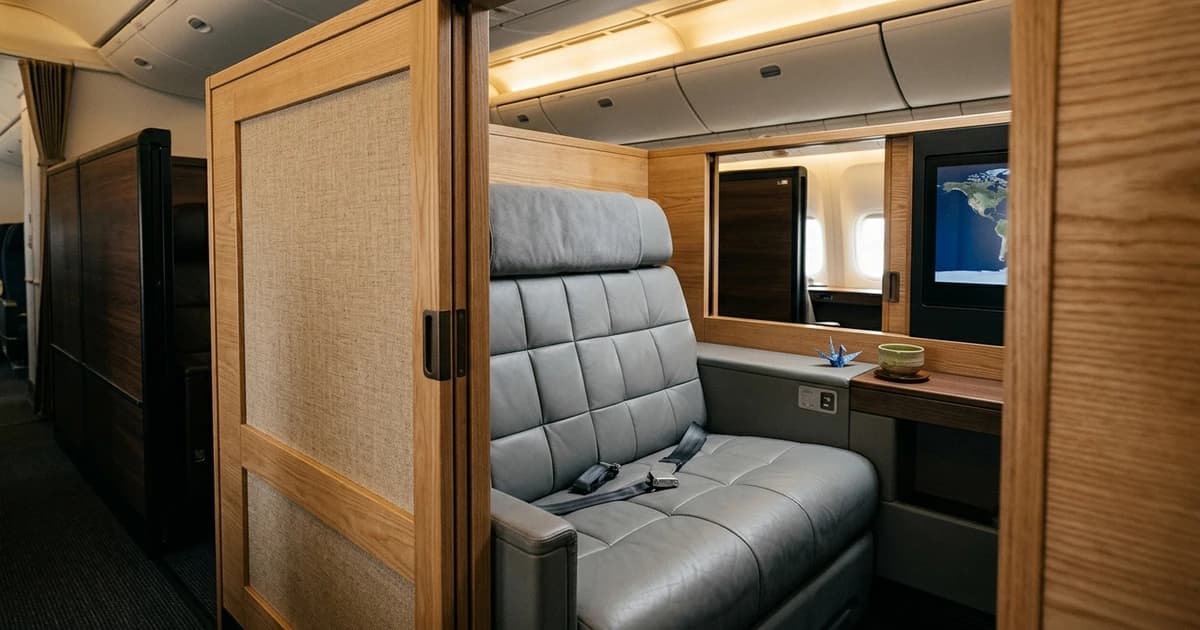
I'll just say it plainly: ANA's The Room is the best business class product operating between Los Angeles and Tokyo right now. It's not particularly close.

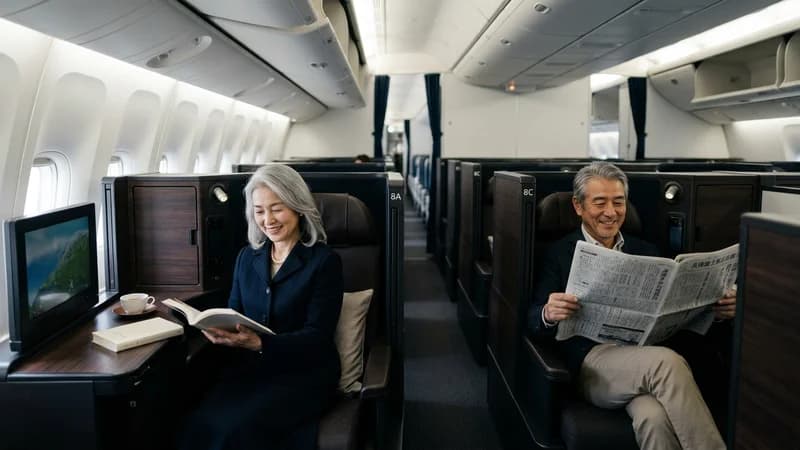
The Room flies on ANA's Boeing 777-300ER, configured in a 1-2-1 layout with fully enclosed suites. Each suite has a closing door, 43 inches of pitch, a dedicated dining table that folds out separately from the tray table, and enough storage that you won't feel like you're living out of your carry-on for 11 hours. The bed is genuinely comfortable — not "flat bed by airline marketing standards" but actually flat, well-padded, and long enough that I didn't wake up with my feet jammed against the footwell.
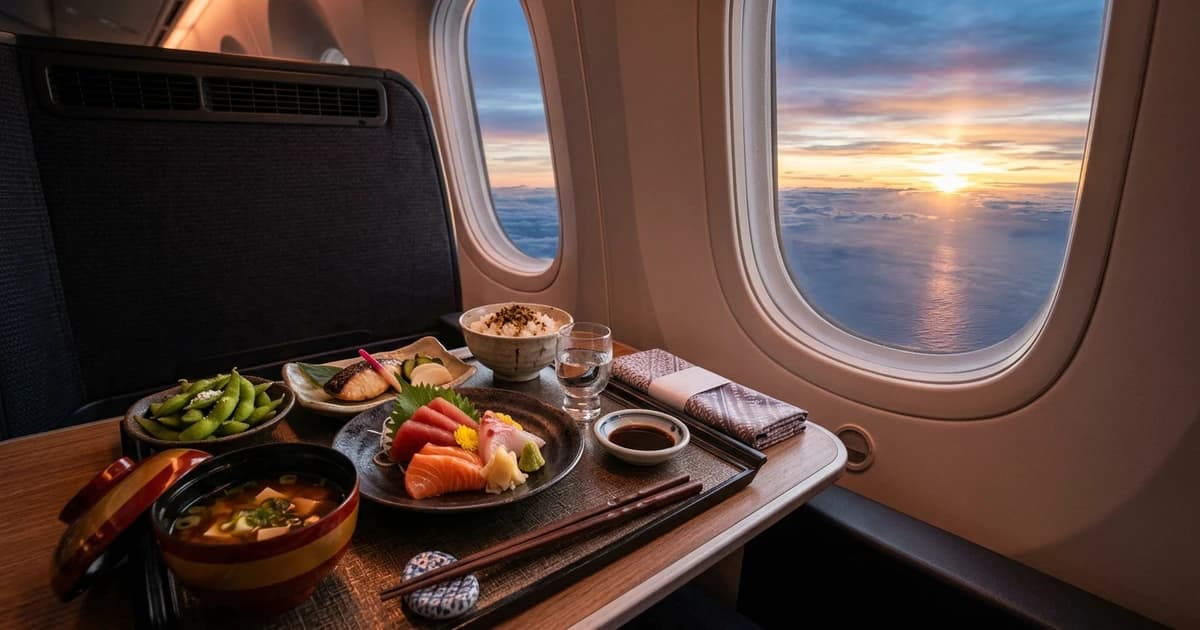
The dining table is a bigger deal than it sounds. Most business class seats have a tray that swings out from the armrest or the ottoman. The Room gives you a proper surface that you can eat at without hunching over your lap. It changes the feel of the meal entirely.
Does every ANA flight from LAX have The Room?
No, and this is the thing most people don't realize until they've already booked.
ANA operates multiple widebody configurations on the LAX–NRT route, and not all of them have The Room. Some flights still use the older Business Staggered product — a 2-2-2 staggered layout where window seats give you direct aisle access but you're not fully enclosed, and the middle pairs mean you're sitting next to a stranger if you're traveling solo. It's a perfectly fine seat. It's not The Room.
When you're booking, you want to specifically confirm you're on a 777-300ER operated with The Room configuration. ANA's seat maps will show this — look for the 1-2-1 layout. If you're booking through ANA directly or through BestBusinessClass.com, ask to have it confirmed in writing. The aircraft can swap before departure, but knowing what you booked gives you leverage if it does.
Pro Tip
ANA flight NH106 from LAX operates the 777-300ER with The Room most consistently. Always verify the seat map at booking and again 72 hours before departure.
One more thing on ANA: you'll arrive at Narita (NRT), not Haneda. Narita is about 60–75 minutes from central Tokyo by the Narita Express, or closer to 90 minutes by bus depending on traffic. It's not a hardship, but it's worth knowing before you assume you'll be checking into your Shinjuku hotel two hours after landing.
JAL Sky Suite: a very good seat with some asterisks
JAL is the other obvious choice on this route, and their business class is genuinely excellent — just not quite as impressive as The Room at its best.
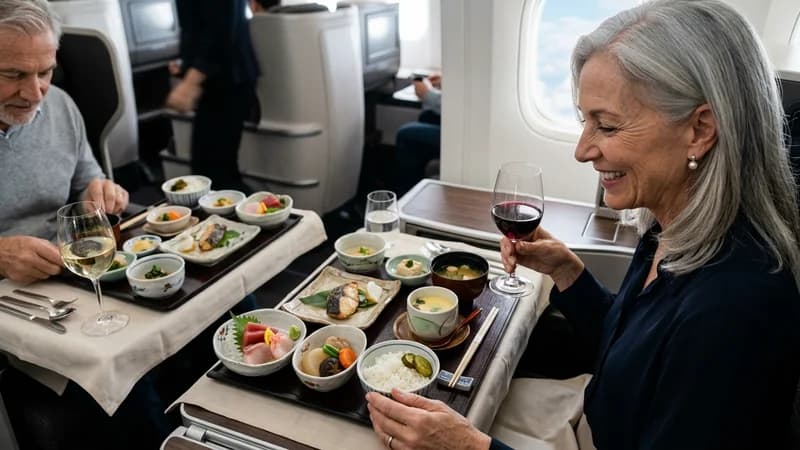
The configuration depends heavily on which aircraft you get. JAL's 787-9 operates the Sky Suite III in a 2-2-2 staggered layout. Window seats have direct aisle access, the privacy is decent, and the seats are comfortable. But it's a 2-2-2, which means if you're in a middle pair, you're close to someone else. And the 787 cabin is narrower than the 777, so the overall feel is a bit more compressed.
The newer product is on JAL's A350 — a 1-2-1 configuration with proper direct aisle access from every seat. If you can get on the A350, do it. The seat is wider, the privacy is better, and JAL's soft product (the food, the service, the bedding) is strong enough that the hardware difference between JAL A350 and ANA The Room becomes much more debatable.
JAL flies into Haneda (HND), which is a significant practical advantage. Haneda is roughly 30–40 minutes from central Tokyo by monorail or taxi, and the airport is dramatically easier to navigate than Narita. If you're doing a short trip or have a tight schedule, JAL's Haneda arrival alone might make the decision for you.
Haneda vs. Narita
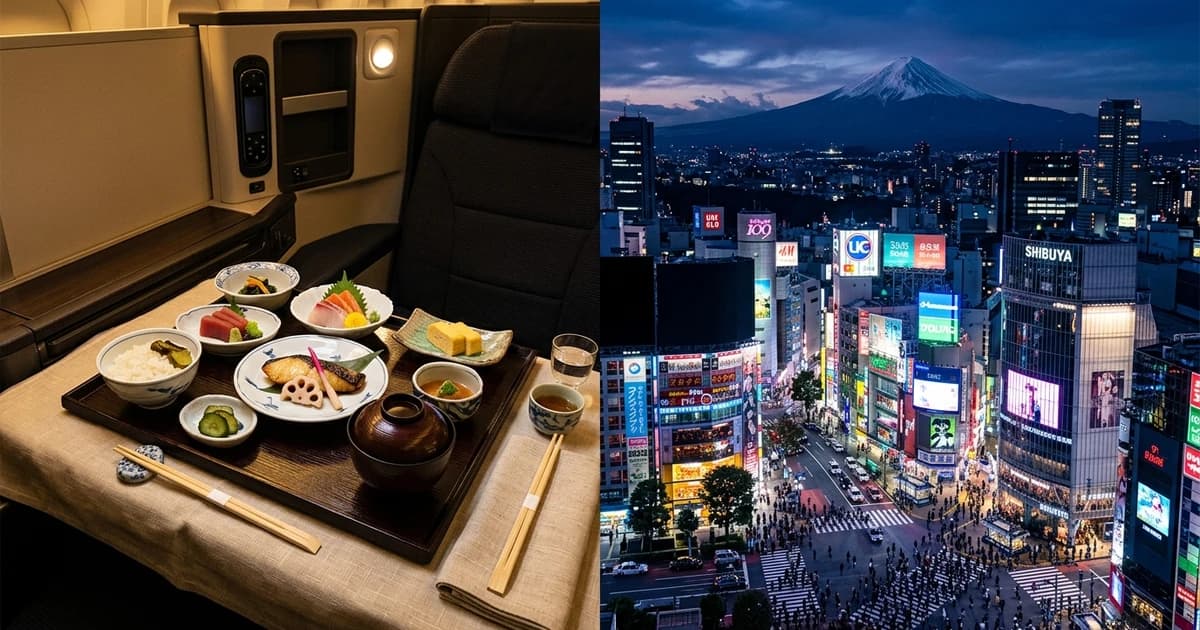
JAL lands at Haneda — 30 minutes to central Tokyo. ANA lands at Narita — up to 90 minutes depending on traffic. If your hotel is in Shibuya or Shinjuku, that's a meaningful difference in your first day.
United Polaris: fine, but you know what you're getting
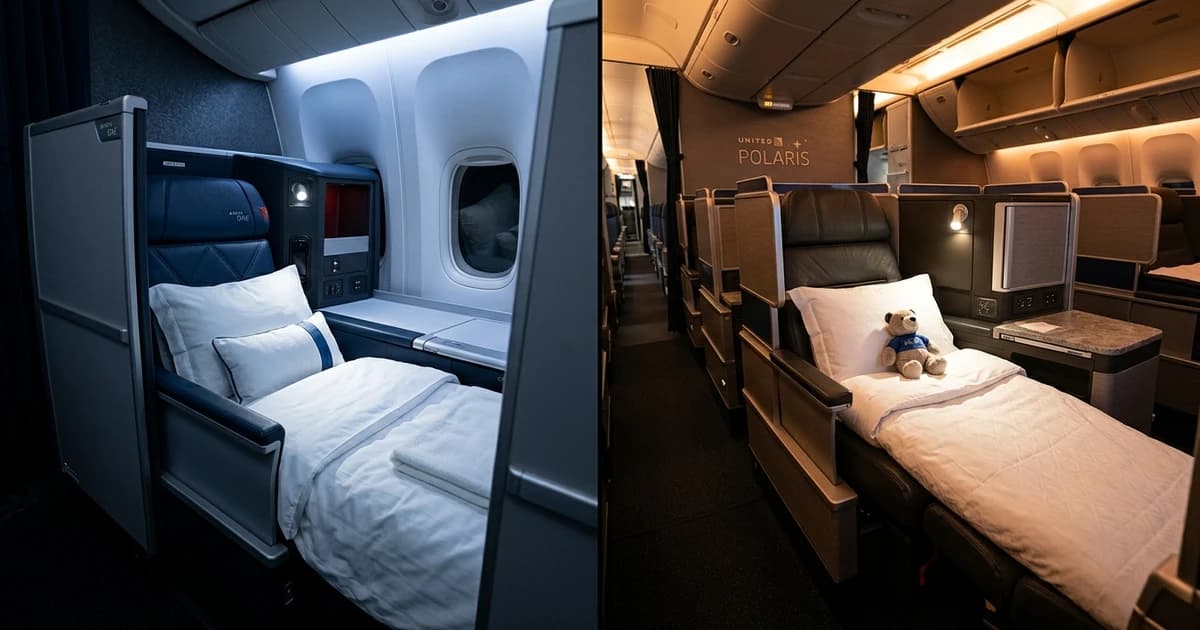
United operates LAX–NRT and LAX–HND on the 787-9 and 787-10 with Polaris business class. I've flown it. It's comfortable, the direct aisle access is there in every seat, and United's catering has improved meaningfully over the past few years.

But Polaris on the 787 isn't enclosed. There's no door. The privacy divider between seats is decent but not the same as what ANA and JAL offer at the premium end. And United's transpacific soft product — the meal quality, the amenity kit, the bedding — trails both Japanese carriers noticeably.
Where United wins: price and availability. United frequently has award space and discounted fares when ANA and JAL don't, and if you're connecting from somewhere in the US interior through LAX, United's network makes the connection easier to manage. For LAX to Tokyo business class, it's a solid fallback. I just wouldn't choose it over The Room if both are available at a similar price.
What this route actually costs — and what it should cost you
Published roundtrip business class fares between LAX and Tokyo run anywhere from $5,000 on a good day to well over $10,000 during peak travel periods. Cherry blossom season (late March through early April) and the week between Christmas and New Year's are the worst times to book at face value. Summer is expensive. Golden Week in Japan (late April/early May) is essentially a blackout period for value fares.

BestBusinessClass.com works with consolidator networks to access fares that don't show up on Google Flights or Expedia. The range I've seen quoted for this route in 2025 and into 2026 is $2,400–$4,200 roundtrip in business class, depending on the season and the airline. That's a meaningful gap from the $7,000–$8,000 you might see on a published fare.
The way to access those fares is to call, not to search online. BestBusinessClass.com's advisors can tell you what's actually available in the consolidator network on specific dates — something that doesn't translate cleanly to a self-serve booking interface.
Call (888) 851-6897 for discounted LAX to Tokyo business class fares
Call NowHow far out should you book?
This varies more than people expect, and getting the timing wrong can cost you real money.
For travel during the winter months (November through February), 90–120 days out is typically the right window. Demand is lower, airlines release more inventory to consolidators, and you have flexibility to be choosy about the aircraft configuration.
Cherry blossom season is a different animal entirely. If you want to be in Japan in late March or early April, you should be looking at fares 150+ days out — ideally closer to six months. The inventory at good prices evaporates fast, and by the time you see cherry blossom content flooding your Instagram feed and think "I should go," the consolidator fares are largely gone.
Summer (July–August) sits somewhere in between. Book 120–150 days out if you can. The fares aren't as bad as peak spring, but they're not winter either.
Cherry blossom season
Late March and early April fares to Japan are some of the most competitive of the year. 150+ days out is not an exaggeration — this is when you want to be on the phone with BestBusinessClass.com, not watching the calendar.
The ANA Suite Lounge at Haneda — and why it matters
ANA's flagship lounge is at Haneda, not Narita. This is one of the few ways the Narita arrival works against you on the outbound leg — you miss the Suite Lounge.
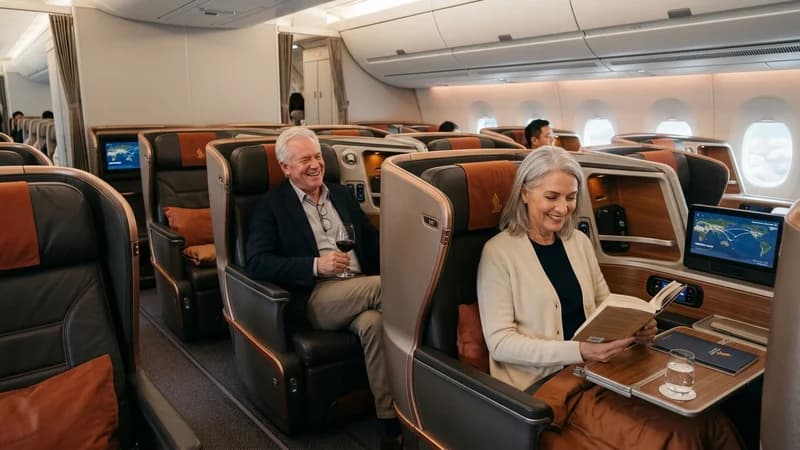
The ANA Suite Lounge at Haneda's international terminal is one of the best airport lounges I've been in anywhere. Private dining rooms where you can book a table, a menu that reads more like a Tokyo restaurant than an airport facility, a sake and whisky bar that would hold its own in Ginza. The ramen is legitimately good. The bath facilities are the kind of thing that makes a long-haul flight feel like a reasonable way to start a trip.
If you're flying ANA from Tokyo back to LAX, you connect through Haneda — and that means Suite Lounge access. Plan to arrive two hours early and mean it. It's worth the time.
For the outbound leg from LAX, ANA uses the Tom Bradley International Terminal. The lounge situation there is fine but not exceptional. You're not going to have a religious experience over the catering. Manage your expectations, grab a seat, and save the lounge excitement for Haneda.
The mixed-cabin strategy most people don't use
Here's something worth knowing if you're watching your budget but don't want to fly coach both ways.

A mixed-cabin itinerary — business class outbound, premium economy on the return — can cut the total cost by around 30% compared to a pure business class roundtrip. The math works because business class fares are heavily asymmetric: the outbound leg (where you're starting your trip rested and motivated) often prices higher, and premium economy on a 10-hour westbound leg is genuinely manageable on ANA or JAL, both of which have decent premium economy products.
Browse current deals on the site if you want to see what mixed-cabin itineraries are running right now. Or call BestBusinessClass.com and specifically ask about mixed-cabin pricing on the LAX–NRT or LAX–HND route — it's not something that surfaces easily through standard search tools.Pro Tip
Ask BestBusinessClass.com about "mixed-cabin" fares: business class LAX to Tokyo outbound, premium economy on the return. You'll likely save 25–30% versus a full business class roundtrip.
Comparing the three carriers head to head
Here's how the main options stack up for 2026:

- Fully enclosed suite with closing door
- 1-2-1 layout, every seat has direct aisle access
- Arrives Narita — longer transfer to central Tokyo
- Suite Lounge access at Haneda on return
- Best hard product on the route
- A350: 1-2-1, excellent product, arrives Haneda
- 787-9: 2-2-2 staggered, still good but less private
- Haneda arrival is a practical advantage
- Strong soft product — food and service are genuinely good
- 1-2-1 layout, direct aisle access from every seat
- No closing door or enclosed suite
- Softer product than Japanese carriers
- Better award availability and US connection options
- Good fallback; not the first choice
If you're flying for the experience and you want the best seat in the sky between California and Japan, book ANA The Room and request the 777-300ER configuration specifically. If you want the easiest arrival experience in Tokyo and a still-excellent business class product, JAL on the A350 is the call. If you're connecting from somewhere in the US and United makes the routing work, Polaris is comfortable enough to get you there well-rested.
And if you want any of these at a price that doesn't require selling something, call BestBusinessClass.com before you book directly with the airline.
This article was created with AI assistance and reviewed by our editorial team.
Business class deals, delivered
Join savvy travelers who receive exclusive deals, route tips, and insider knowledge. Free, weekly, no spam.
Unsubscribe anytime. We respect your inbox.
By submitting, you agree to our Privacy Policy and Terms of Service.
Ready to book your business class flight?
Our specialists access unpublished fares and save you up to 40% on premium cabins.
Related Routes