Quick summary
Seattle is quietly one of the best departure cities in North America for a Tokyo business class flight — the great circle route shaves 90 minutes off what you'd suffer through from LAX, and Delta's nonstop to Haneda puts you 20 minutes from central Tokyo. Published fares run $4,500–$8,800 round-trip, but BestBusinessClass.com clients regularly book the same seats for $2,200–$3,800 through consolidator pricing. This article covers Delta One's A330-900neo suite, the ANA codeshare situation, lounge options at SEA, and how to time your booking to get the best rates.
Why Seattle actually makes sense for Tokyo
Most East Coast travelers assume they're stuck connecting through a hub. But if you're on the West Coast — or willing to position to Seattle — the math changes significantly.
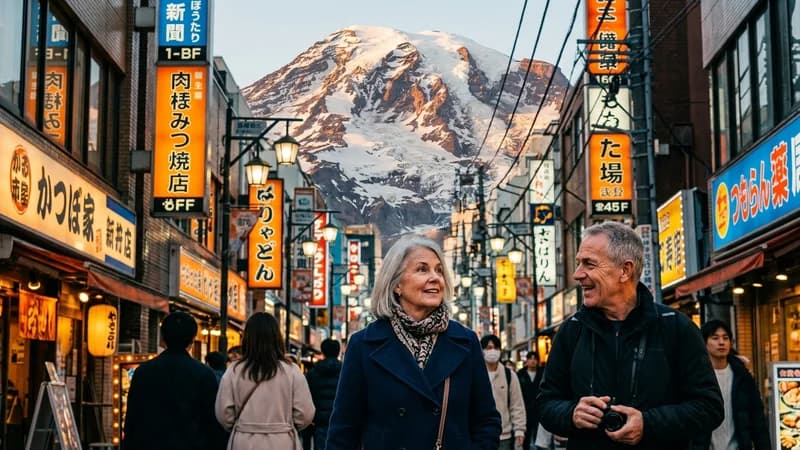
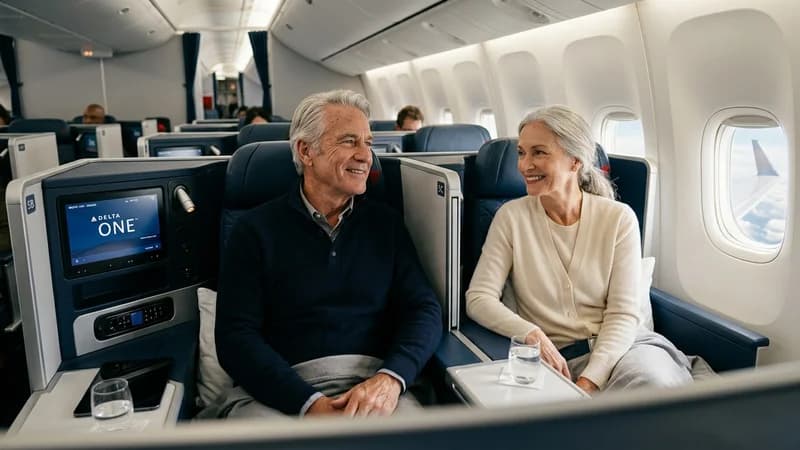
Seattle-Tacoma sits at a latitude that puts it closer to Tokyo on a great circle routing than Los Angeles by a meaningful margin. Delta's SEA-HND flight runs around 9.5 hours westbound. LAX to NRT is 11 hours or more. That's not a rounding error. That's a full night's sleep.
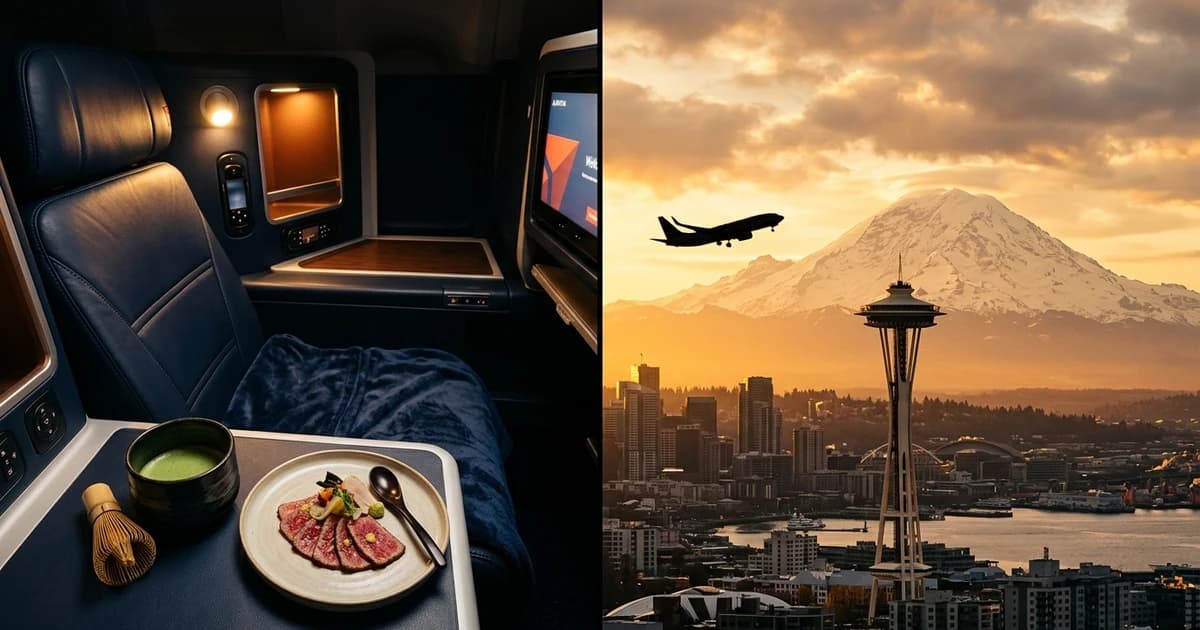
And Seattle isn't a compromise airport. It's a proper international hub with a recently expanded Delta Sky Club, a solid terminal layout, and direct rail access from downtown. The city's tech corridor — Boeing, Amazon, Microsoft, a dense cluster of biotech firms — means this route carries a lot of corporate travelers, which keeps capacity high and service investment justified.
Delta One on the A330-900neo: what you're actually getting
Delta has been operating the A330-900neo on Seattle–Haneda, and this is genuinely one of the better hard products in the sky right now. The Delta One Suite — not the old angled flat, not the newer-but-still-mediocre middle product — is the real deal.
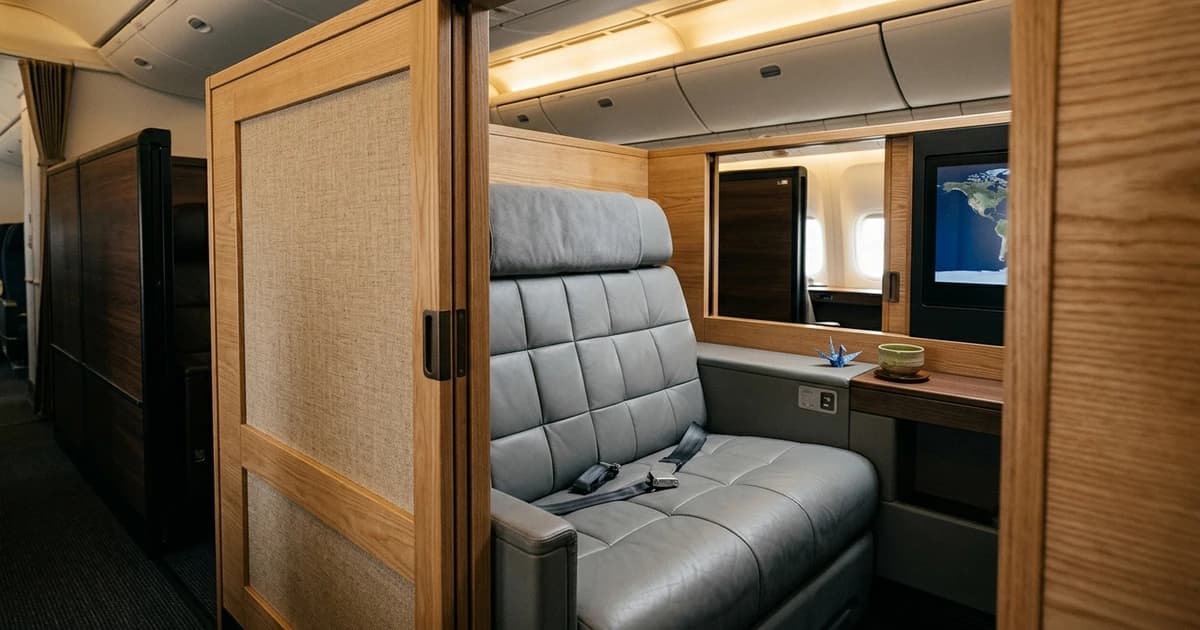
Each suite has a closing door. That's still rarer than it should be in 2025, and it matters. Whether you want to sleep without a stranger's reading light in your face or you're reviewing confidential documents at 35,000 feet, the door earns its place.
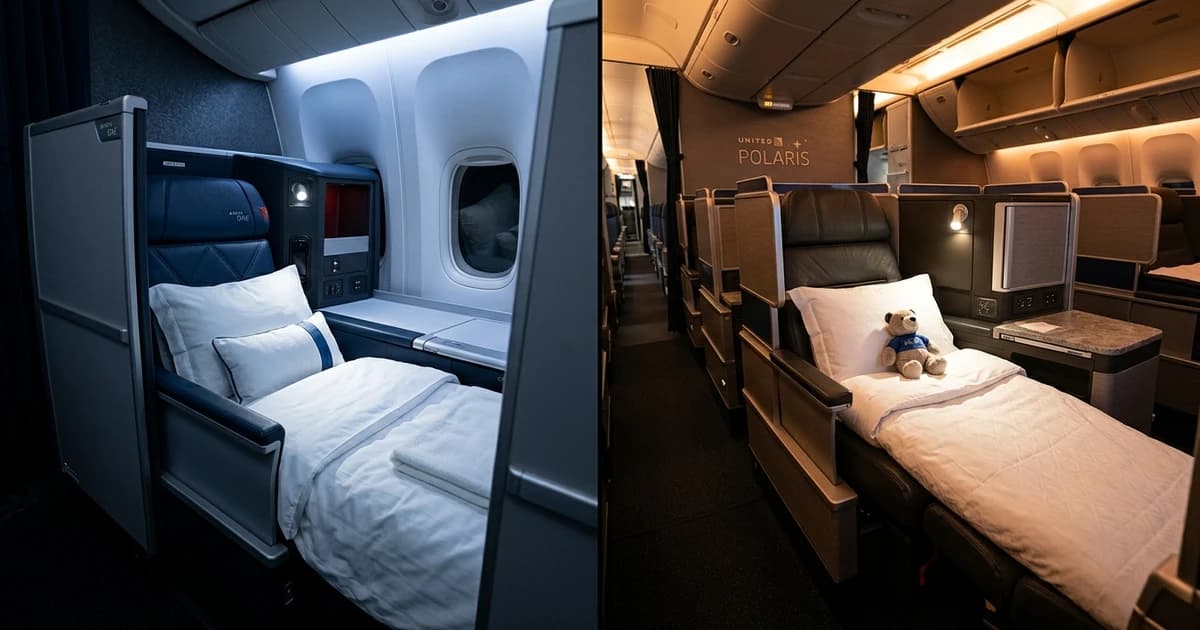
The seat itself reclines to a fully flat 78-inch bed. The IFE screen is 18 inches and rotates to face you when the seat is in bed mode — a small detail that Delta actually got right. Westin Heavenly bedding is standard, and while "hotel brand bedding" announcements can feel like marketing fluff, the mattress pad they put on the flat bed is noticeably thicker than what you'll find on most competitors.
Best seats on the A330-900neo
The Delta One cabin is configured in a 1-2-1 layout. Every seat has direct aisle access. Window seats in even rows (2A, 4A, etc.) have the suite door on the aisle side for extra privacy. Avoid the bulkhead row if you value storage — there's no under-seat space.
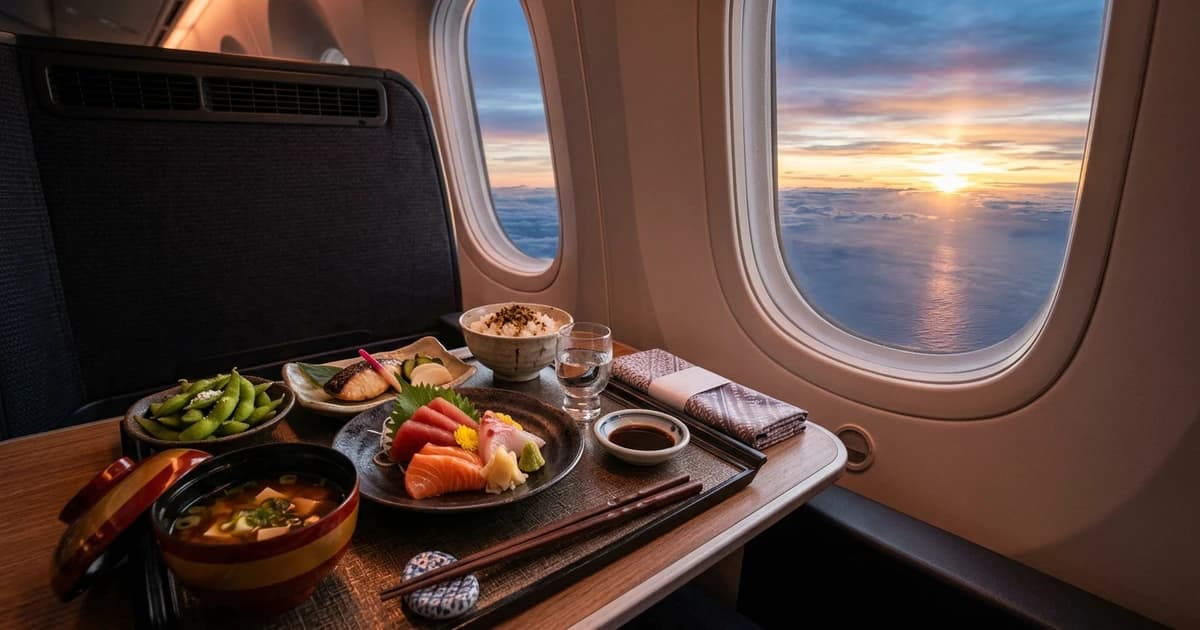
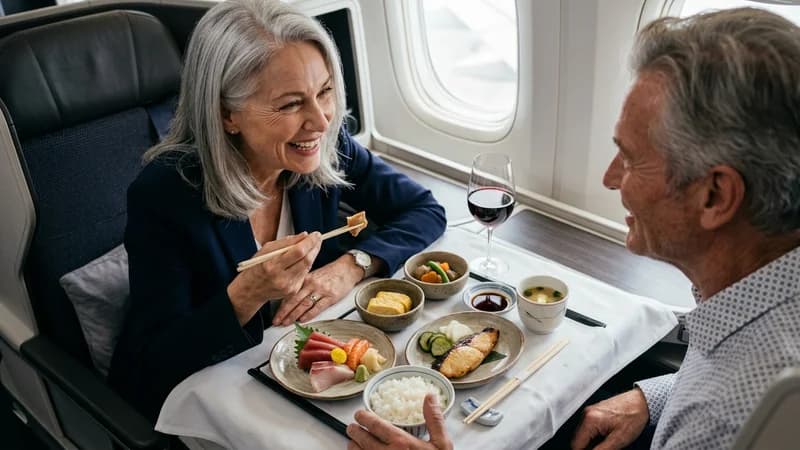
The tableware is Alessi-designed, which sounds like a footnote but actually makes the meal service feel more considered. Delta's craft cocktail program on this route includes a Japanese whisky option — I've had the Suntory Toki highball somewhere over the Aleutian Islands and it's a perfectly reasonable way to spend an hour of flight time.
Food is where Delta has invested the most visible effort. The partnership with Mistura — a Latin-Asian fusion concept — shows up in dishes like a miso-glazed short rib and a yuzu-dressed ceviche that actually makes sense on a Japan-bound flight. It's not Cathay Pacific's dim sum trolley, and I won't pretend otherwise. But for a U.S. carrier, it's competitive.
The ANA codeshare situation (read this before you book)
Here's where things get genuinely complicated, and where a lot of travelers get caught off guard.

Delta and ANA are partners within the SkyTeam and joint venture framework. When you search Seattle to Tokyo business class on Delta.com, you'll sometimes see flights operated by ANA — specifically on the SEA-NRT routing. The ticket looks like a Delta fare. The booking code is Delta. But you board an ANA plane.
That's not automatically a bad thing. ANA is one of the best airlines in the world. The issue is that you need to know which aircraft you're getting.
What aircraft is ANA actually flying?
ANA operates the SEA-NRT route on a 787-9, which has a staggered business class product. It's a good seat — 1-2-1 layout, fully flat, direct aisle access — but it's not "The Room," ANA's premium suite product. The Room (found on ANA's 777-9 and some 777-300ER configurations) is a genuinely special product with a closing door and a suite-within-a-suite feel. If ANA substitutes a 777 on a given departure, you might get The Room. But you cannot count on it, and you won't be able to confirm it reliably at booking.
Codeshare service expectations
When you book a Delta-ticketed codeshare and fly ANA metal, the in-flight experience — food, wine, amenity kit, IFE — is ANA's, not Delta's. Your Sky Club access at SEA is still Delta. Your miles credit goes to your Delta account. But the actual flight is an ANA product. Know what you're buying.
The ANA 787-9 business class product is excellent in its own right. The food is arguably better than Delta's — ANA's catering on Japan routes is a point of genuine pride for the airline, and you'll see it in the kaiseki-influenced meal structure and the quality of the sake selection. If you're someone who prioritizes the arrival airport (more on that below), and NRT works for you, the ANA codeshare is worth considering.
For a deeper look at how ANA's long-haul business product stacks up, the ANA business class overview on this site is worth reading before you decide.
Haneda vs. Narita: this actually matters
People skip over this and then spend 90 minutes on a train wondering why they didn't pay attention.
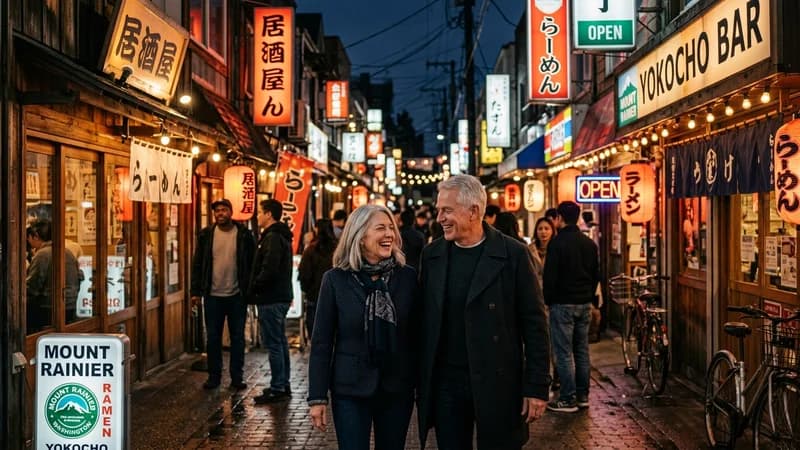
Haneda (HND) is Tokyo's closer airport — about 20 minutes by monorail or taxi to central neighborhoods like Shibuya, Shinjuku, or the Marunouchi business district. If you're going to Tokyo for work, landing at Haneda means you could theoretically be in a meeting before noon on a 10 AM arrival. It's that close.
Narita (NRT) is a perfectly functional international airport that is, bluntly, far from the city. The Narita Express (N'EX) takes 75–90 minutes to Shinjuku and costs around ¥3,000. Taxis are not a reasonable option — budget ¥20,000+ if you go that route.
Delta's nonstop from Seattle goes to Haneda. That's a meaningful advantage for most Tokyo travelers.
The ANA codeshare typically routes through Narita. Not a dealbreaker, but factor it in when comparing options. If your hotel is in Shinjuku or Shibuya, the extra hour of transit after a 10-hour overnight flight is a real consideration.
Pro Tip
If you land at Narita, book your N'EX ticket in advance through the JR website. You'll save a small amount on the fare and skip the queue at the airport ticket machines, which can be slow when multiple international flights land in the same hour.
Is the Delta Sky Club at SEA worth arriving early for?
The short answer: yes, with caveats.
Delta has expanded the Sky Club at Seattle-Tacoma in the last two years, and it's now a genuinely good lounge — not world-class, but comfortable, well-staffed, and less chaotic than the Delta clubs at JFK or ATL during peak hours. The food spread is above average for a domestic Sky Club: I've had decent charcuterie, a rotating hot station, and cocktails that don't taste like they were made by someone who has never tasted a cocktail.
The Centurion Lounge at SEA is the obvious alternative if you're holding an Amex Platinum or a card with Centurion access. It's smaller and can hit capacity during evening pushes, but the food quality is consistently higher. If your flight departs before 7 PM, you'll likely get in without a wait.
For Delta One passengers specifically, access to the Sky Club is included regardless of credit card status. So if you're flying Delta One on this route, just use the club — it's right there and it's decent.
How Seattle tech demand affects pricing (and when to book)
This is something I don't see written about enough.
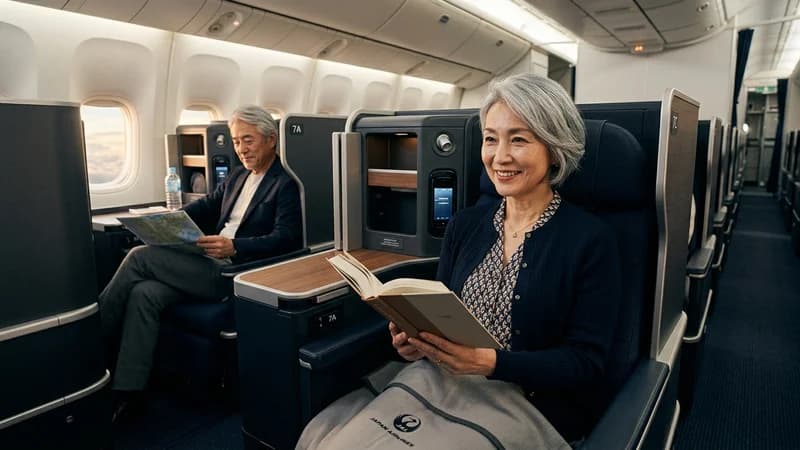
Seattle's business travel market is dominated by tech and aerospace. Amazon, Microsoft, Boeing, Expedia — these companies send people to Tokyo regularly, and many of them book mid-week departures on short notice with corporate cards. That demand pattern has a real effect on pricing.
Tuesday and Wednesday departures on the SEA-HND route are measurably more expensive than weekend departures. Not by 10% — sometimes by 30-40% on published fares. The corporate travel machine absorbs those prices because it doesn't have a choice.
If you have flexibility, Saturday departures are consistently the sweet spot. Returning on a Thursday (rather than Friday or Sunday, when leisure demand spikes) also helps. BestBusinessClass.com has found that Saturday departures returning on a Thursday can run 20-30% lower than the equivalent mid-week itinerary, even at consolidator rates.
What BestBusinessClass.com actually does here
People sometimes ask how consolidator pricing works, so here's the plain version.
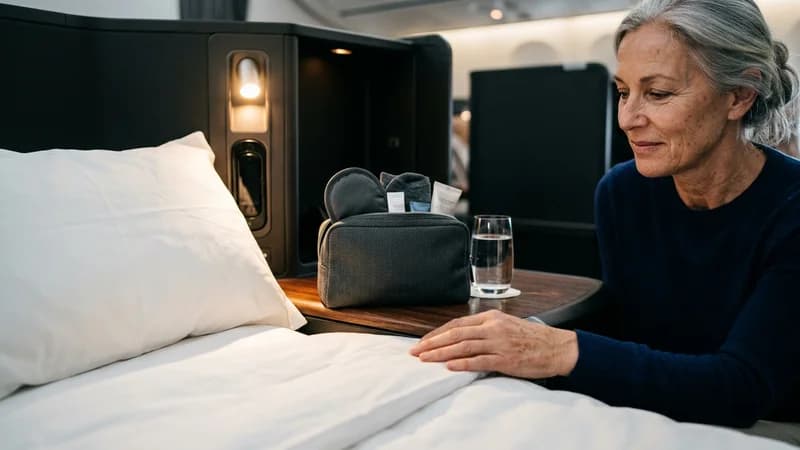
BestBusinessClass is a concierge service that accesses business class fares through wholesale consolidator networks — fare buckets that aren't available on Google Flights, Kayak, or even the airline's own website. These are negotiated rates that consolidators hold based on volume commitments with carriers.
On the Seattle to Tokyo business class routes, that translates to real savings. Published fares on Delta One SEA-HND run $4,500–$8,800 round-trip depending on season and booking lead time. BestBusinessClass clients on this route have paid $2,200–$3,800 for the same seats, same dates, same airline.
The process is simple: you call or submit a request, a real person finds your options, and you book. There's no algorithm optimizing for affiliate revenue. You get a human who knows the difference between the A330-900neo Delta One Suite and the older flat-bed product, and who can tell you whether the ANA codeshare on a given date is on a 787-9 or something else.
You can also browse current deals on the site if you want a starting point before calling.
When to reach out
Business class consolidator fares on Tokyo routes tend to be strongest 3–6 months out. Within 6 weeks of departure, availability tightens and pricing can spike — especially on the SEA-HND route where Delta manages inventory tightly. Don't wait until two weeks before you fly.
A few things worth knowing before you fly
The A330-900neo Delta One cabin has 32 suites. On a popular route like SEA-HND, the cabin fills up. If you're booking a consolidator fare through BestBusinessClass, ask about seat selection early — the best window suites go fast, and the middle pairs are significantly less appealing for solo travelers.
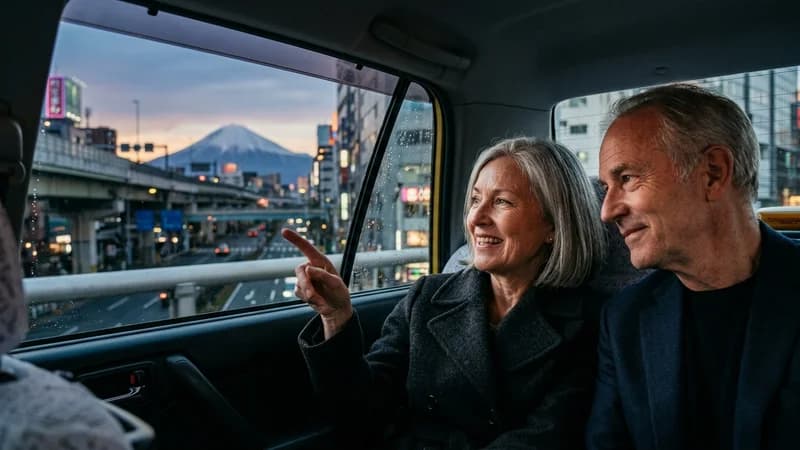
ANA's 787-9 business class has 48 seats in a staggered 1-2-1. Alternating rows have seats closer to the window or closer to the aisle, so row position matters more than you'd think. Odd rows tend to have the seat closer to the window, which most people prefer.
Japan has removed most of its pandemic-era entry requirements, and as of 2025-2026, U.S. citizens enter visa-free for stays up to 90 days. The Visit Japan Web registration (customs and immigration pre-registration) is optional but speeds up arrival processing at both HND and NRT.
One more thing: both Haneda and Narita have excellent airport lounges post-security, but you're typically only accessing these on the return leg. ANA's lounges at HND are genuinely impressive — the Suites Lounge at HND Terminal 3 has a ramen bar and a sake selection that makes the pre-departure experience feel like the trip is already going well.
For context on how this route compares to other Pacific business class options, the best Pacific business class routes piece covers the broader competitive picture.
Get a real quote on Seattle to Tokyo business class — consolidator rates from $2,200 round-trip
Call (888) 851-6897This article was created with AI assistance and reviewed by our editorial team.
Business class deals, delivered
Join savvy travelers who receive exclusive deals, route tips, and insider knowledge. Free, weekly, no spam.
Unsubscribe anytime. We respect your inbox.
By submitting, you agree to our Privacy Policy and Terms of Service.
Ready to book your business class flight?
Our specialists access unpublished fares and save you up to 40% on premium cabins.
Related Routes